


By Jackson Godwin. Cybersecurity Analyst & Penetration Tester.
The Warning Signs Everyone Should Know
After ending the call, I kept thinking about how convincing the scammer had sounded.
He wasn’t aggressive.
He didn’t threaten me.
He didn’t sound nervous.
He sounded exactly like someone doing his job.
That experience reminded me that modern scams often rely more on psychology than technology.
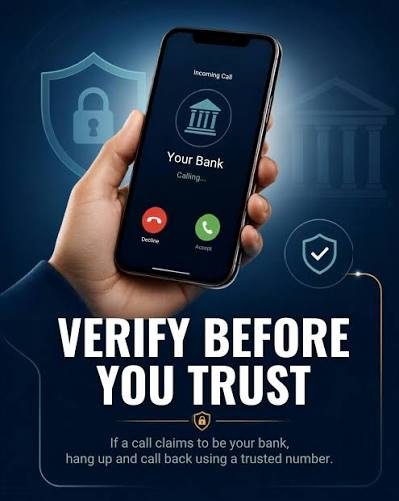
Here are some warning signs that should make you pause during any unexpected phone call claiming to be from your bank.
🚩 Warning Sign #1: They Create Urgency
One of the oldest tricks used by scammers is creating panic.
You may hear statements like:
- “Your account is about to be blocked.”
- “Someone is trying to withdraw money.”
- “You must act immediately.”
- “This is your final warning.”
The goal is simple.
They don’t want you to stop and think.
They want you to react emotionally instead of making a careful decision.
Whenever someone pressures you to act immediately, slow down.
🚩 Warning Sign #2: They Ask for Sensitive Information
Be extremely cautious if an unexpected caller asks for:
- Your online banking password.
- Your ATM PIN.
- One-Time Passwords (OTPs).
- Card verification codes (CVV).
- Internet banking login details.
Banks generally have established ways to verify customers and should not ask you to reveal confidential security credentials during an unsolicited phone call.
If you’re unsure, end the call and contact the bank yourself using an official number.
🚩 Warning Sign #3: They Don’t Want You to Hang Up
This was the biggest red flag during my experience.
When I suggested calling the bank directly, the caller immediately discouraged me.
That told me everything I needed to know.
Legitimate organizations should understand if you choose to verify their identity independently.
Anyone trying to stop you from doing that deserves extra caution.
🚩 Warning Sign #4: They Want You to Move Money
Some fraudsters tell victims to:
- Transfer money to a “safe account.”
- Reverse a transaction.
- Approve a payment.
- Verify an account by sending money.
Pause immediately.
If someone asks you to move your own money because of an unexpected phone call, verify the request independently before taking any action.
What If You Already Shared Information?
If you realize you’ve accidentally shared sensitive information during a suspicious call, don’t panic.
Act quickly.
Consider these steps:
- Contact your bank immediately using its official customer service number.
- Explain exactly what happened.
- Change passwords for affected accounts if appropriate.
- Review your recent transactions.
- Monitor your accounts for unusual activity.
- Report the incident if necessary.
The faster you respond, the better your chances of limiting potential damage.
A Simple Checklist to Remember
Whenever you receive an unexpected call claiming to be from your bank:
✅ Stay calm.
✅ Never feel pressured to act immediately.
✅ Never share passwords, PINs, or OTPs.
✅ Verify independently using official contact information.
✅ End the call if something doesn’t feel right.
These simple habits can prevent many common phone scams.
Frequently Asked Questions
Can scammers make a phone call appear to come from a trusted organization?
Phone numbers displayed on caller ID are not always reliable indicators of who is actually calling.
That’s why you should rely on independent verification, not caller ID alone.
What is “vishing”?
Vishing (voice phishing) is a type of scam where criminals use phone calls to trick people into revealing sensitive information or taking actions that benefit the scammer.
Like email phishing, it relies heavily on social engineering.
Is every unexpected bank call a scam?
No.
Banks may contact customers for legitimate reasons.
The important point is that you don’t have to continue the conversation if you’re unsure.
You can politely end the call and contact the bank yourself using an official phone number from its website, mobile app, or the back of your bank card.
Why do scammers sound so convincing?
Many fraudsters rehearse their scripts, use professional language, and remain calm to build trust.
Their success often depends more on influencing human behavior than on technical hacking skills.
The Biggest Lesson I Learned
That phone call lasted less than ten minutes.
Yet it reminded me of something I teach during every cybersecurity awareness session.
The biggest threat isn’t always malicious software.
Sometimes it’s a conversation.
A polite voice.
A believable story.
And a sense of urgency.
Cybersecurity isn’t just about protecting computers.
It’s about protecting our decisions.
Final Thoughts
Looking back, I wasn’t saved by expensive security software.
I wasn’t saved by advanced hacking knowledge.
I was saved by one simple habit.
I verified independently.
That single decision ended the scam.
The next time someone calls claiming to be from your bank, remember this story.
Don’t let urgency control your actions.
Don’t assume a professional voice means a legitimate caller.
Pause.
Think.
Verify.
Then decide.
Those few extra minutes could protect your savings, your personal information, and your peace of mind.
If this article helped you, consider sharing it with your family, friends, and colleagues.
You might help someone recognize a scam before it’s too late.
About the Author
Jackson Godwin is a Cybersecurity Consultant specializing in Vulnerability Assessment and Penetration Testing (VAPT), Governance, Risk and Compliance (GRC), ISO/IEC 27001, PCI DSS, Cloud Security, AI Security, and Digital Risk Management.
With years of experience helping organizations strengthen their cybersecurity posture, Jackson is passionate about making cybersecurity simple, practical, and easy to understand for everyone.
Through JacksonTechnology.com.ng, he publishes cybersecurity awareness stories, ethical hacking tutorials, cloud security insights, compliance guides, AI security resources, and practical online safety tips that help individuals and businesses stay protected in an increasingly connected world.
His mission is to educate, empower, and inspire safer digital habits—one cybersecurity story at a time.