


What If I Had Clicked the Link?
The more I thought about that night, the more one question kept coming back to me.
What if I had clicked the “Reset Password” button?
Would my email have been hacked instantly?
Would I have lost my bank account?
Would everything have disappeared overnight?
The truth is a little more complicated.
Clicking a phishing link doesn’t always mean your account has been compromised.
The real danger begins when you interact with the fake website—for example, by entering your username, password, or other sensitive information.
That is why acting quickly is so important.
What To Do If You Clicked a Phishing Link
Suppose you accidentally clicked the link but realized something was wrong before entering your password.
Here’s what you should do:
- Close the website immediately.
- Do not download any files it offers.
- Do not enter any login details.
- Run a security scan on your device using reputable security software.
- Clear your browser cache if appropriate.
- Monitor your account for unusual activity.
If you did enter your password, act immediately.
Change Your Password Right Away
Use a trusted device and go directly to your email provider’s official website by typing the address yourself.
Do not return to the phishing email.
Create a completely new password.
Your new password should be:
- Long
- Unique
- Difficult to guess
- Different from every other password you use
Avoid using:
- Your birthday
- Your phone number
- Your name
- Simple keyboard patterns
A password manager can help generate and securely store strong passwords.
Review Your Security Settings
Once you’ve secured your password, review your account settings.
Check:
- Recovery email address
- Recovery phone number
- Trusted devices
- Login history
- Security alerts
If anything looks unfamiliar, remove it immediately and sign out of all other sessions if your email provider offers that option.
Enable Multi-Factor Authentication (MFA)
If there is one lesson every internet user should take from this story, it is this:
Enable Multi-Factor Authentication.
Even if an attacker somehow learns your password, MFA adds another layer of protection by requiring an additional verification step.
Many email providers support authentication apps, hardware security keys, or other verification methods.
Using MFA dramatically improves your account security.
Why Email Security Matters More Than Ever
Your email account is connected to almost every part of your online life.
Think about everything linked to it:
- Online banking
- Social media
- Shopping websites
- Cloud storage
- Government services
- Work applications
- Password recovery
Protecting your email isn’t just about protecting one account.
It’s about protecting your entire digital identity.
Warning Signs of a Phishing Email
Whenever you receive an unexpected security email, ask yourself these questions:
✅ Did I actually request a password reset?
✅ Does the sender’s email address exactly match the official company domain?
✅ Is the email trying to make me panic?
✅ Does the website address look correct?
✅ Am I being asked to act immediately?
If something doesn’t feel right…
Stop.
Verify.
Think.
Cybersecurity is often about slowing down before making a decision.
A Simple Email Security Checklist
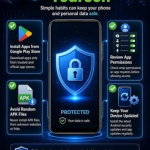
Here are a few habits that can significantly improve your email security:
✔ Use a unique password for every important account.
✔ Enable Multi-Factor Authentication.
✔ Review login history regularly.
✔ Keep your recovery information up to date.
✔ Keep your operating system and browser updated.
✔ Never click password reset links from unexpected emails without verifying them first.
✔ Type the official website address into your browser instead of following email links.
✔ Learn to recognize phishing attempts and report suspicious emails when appropriate.
Frequently Asked Questions
Does receiving a password reset email mean I’ve been hacked?
Not necessarily.
Someone may have entered your email address by mistake, an attacker may be testing whether your account exists, or the email itself may be a phishing attempt.
Always verify before taking action.
Should I change my password after receiving a suspicious email?
If you believe you interacted with a phishing page or suspect your account may be at risk, changing your password is a sensible precaution.
Is Multi-Factor Authentication really necessary?
Yes.
MFA is one of the most effective ways to reduce the risk of unauthorized account access.
How can I tell if a website is fake?
Look carefully at the web address.
Attackers often create websites with names that closely resemble legitimate domains.
When in doubt, type the official website address yourself instead of following links from emails.
Final Thoughts
When my phone vibrated at 2:03 AM, I thought someone was trying to hack my email.
Fortunately, that wasn’t what happened.
Instead, someone was trying to trick me into giving away my own password.
That experience reinforced one of the biggest lessons in cybersecurity:
Attackers don’t always break into your account.
Sometimes…
They simply convince you to open the door.
In today’s digital world, phishing attacks are becoming more convincing than ever.
The logos are real.
The grammar is professional.
The urgency feels genuine.
But one habit can make all the difference.
Never let panic make your security decisions.
Slow down.
Verify the sender.
Visit official websites directly.
Protect your email.
Because once your email account is secure, you’ve already taken one of the most important steps toward protecting your digital life.
About the Author
Jackson Godwin is a Cybersecurity Consultant specializing in Vulnerability Assessment and Penetration Testing (VAPT), Governance, Risk and Compliance (GRC), ISO/IEC 27001, PCI DSS, Cloud Security, AI Security, and Digital Risk Management.
With years of experience helping organizations identify security weaknesses, strengthen compliance programs, and improve cyber resilience, Jackson is committed to making cybersecurity practical, understandable, and accessible for everyone.
Through JacksonTechnology.com.ng, he publishes cybersecurity tutorials, ethical hacking guides, cloud security insights, compliance resources, and real-world security awareness stories that help individuals and businesses stay ahead of modern cyber threats.
Visit JacksonTechnology.com.ng for expert cybersecurity articles, penetration testing resources, security awareness content, AI security insights, and practical advice to help protect your digital life.