The PDF Invoice That Installed Ransomware (Part 3)
July 30, 2026
Com 0
By Jackson Godwin. Cybersecurity Analyst & Penetration Tester
The Company Refused to Pay
After several hours of investigation, management held an emergency meeting.
The attackers demanded the equivalent of thousands of dollars in cryptocurrency for the decryption key.
Some employees wondered whether paying would be the fastest way to recover the files.
The cybersecurity team advised against it.
There was no guarantee the attackers would provide a working decryption key—or that they wouldn’t target the company again.
Instead, the company focused on incident response and recovery.
The Backup Saved the Business
Fortunately, the IT department had maintained recent offline backups of critical business data.
Restoring everything still took time.
Some recent work created after the last backup had to be recreated manually.
But the company avoided losing all of its important information.
That experience proved something every cybersecurity professional already knows:
A reliable backup can be one of the strongest defenses against ransomware.
The Investigation Revealed the Truth
Digital forensic investigators examined the malicious email.
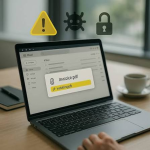
The fake invoice had been carefully designed to resemble routine business correspondence.
It used:
A convincing supplier name.
Professional formatting.
An urgent payment request.
A malicious attachment disguised as an ordinary document.
The attackers didn’t need sophisticated hacking techniques.
They only needed someone to trust the email.
Warning Signs of Invoice Ransomware Emails
Looking back, several clues stood out.
🚩 Unexpected Invoices
If you receive an invoice you weren’t expecting, verify it with the sender using official contact details before opening any attachment.
🚩 Urgent Payment Demands
Messages insisting that payment must be made immediately are designed to reduce careful thinking.
Take a moment to verify before acting.
🚩 Attachments That Request Extra Actions
Be cautious if a document asks you to enable additional features or follow unusual instructions before it can be viewed.
Legitimate invoices typically open normally without requiring unexpected actions.
🚩 Small Differences in Email Addresses
Always look beyond the sender’s display name.
A message can appear to come from a trusted supplier while using an unrelated email address.
🚩 Pressure Instead of Verification
Professional suppliers usually welcome verification if you have questions.
Scammers often rely on urgency and discourage delays.
How to Protect Yourself From Ransomware
Simple habits can dramatically reduce your risk.
Verify unexpected invoices with the sender using trusted contact information.
Keep operating systems and software updated.
Maintain regular backups and test that they can be restored.
Use reputable security software.
Train employees to recognise phishing attempts.
Report suspicious emails to your IT or security team instead of simply deleting them.
Never assume an attachment is safe simply because it looks familiar.
Cybersecurity begins long before malware executes.
It starts with careful decision-making.
Frequently Asked Questions
Can a PDF really install ransomware?
Some ransomware campaigns have used files that appear to be ordinary documents as part of a broader phishing attack.
The exact infection method varies, but malicious attachments remain a common way attackers attempt to compromise systems.
Should victims pay the ransom?
Law-enforcement agencies and cybersecurity professionals often caution that paying does not guarantee file recovery and may encourage further criminal activity.
If you experience a ransomware incident, follow your organisation’s incident response process and seek professional assistance.
What’s the best defence against ransomware?
There is no single solution.
Strong backups, timely software updates, user awareness, email security and incident response planning all play important roles in reducing risk.
Final Thoughts
The ransomware didn’t arrive through a dramatic cyberattack.
It arrived as an ordinary invoice.
That is what makes modern cybercrime so dangerous.
The most effective attacks often hide inside everyday business activities.
An email.
A document.
A routine task.
The lesson I learned was simple.
Never trust an attachment simply because it looks professional. Verify it first.
One email can interrupt an entire business.
One careful verification can prevent that email from becoming a crisis.
About the Author
Jackson Godwin is a Cybersecurity Consultant specialising in Vulnerability Assessment and Penetration Testing (VAPT), Governance, Risk and Compliance (GRC), ISO/IEC 27001, PCI DSS, Cloud Security, AI Security, and Digital Risk Management.
Through JacksonTechnology.com.ng, he publishes cybersecurity awareness stories, ethical hacking tutorials, compliance guides, and practical online safety advice to help individuals and organisations recognise cyber threats, defend against ransomware, phishing, and other cyber risks, and build stronger digital resilience.
His mission is to make cybersecurity practical, relatable, and accessible—one cyberstory at a time.