


By Jackson Godwin. Cybersecurity Analyst & Penetration Tester
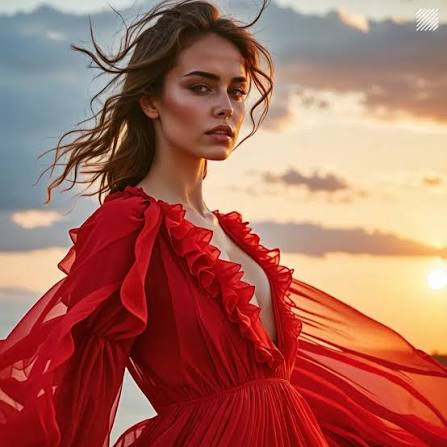
I Decided to Investigate
Instead of continuing the conversation as usual, I started examining the photos more carefully.
At first glance, they looked completely authentic.
But when I zoomed in, I noticed small details that didn’t seem right.
In one picture:
- One earring was slightly different from the other.
In another:
- A few strands of hair seemed to blend unnaturally into the background.
In a third:
- One hand looked slightly distorted.
Individually, these flaws were easy to miss.
Together, they made me suspicious.
Reverse Image Search Didn’t Help
My next step was to perform a reverse image search.
To my surprise, nothing appeared.
The photos weren’t stolen from another person’s social media account.
That confused me.
If the pictures weren’t stolen, where had they come from?
I later learned that AI-generated images often don’t appear in reverse image search results because they are newly created rather than copied from existing photographs.
The Profile Felt Almost Too Perfect
As I reviewed our conversations, I noticed another pattern.
Every photograph showed the same polished appearance.
There were:
- No awkward selfies.
- No family gatherings.
- No birthday celebrations.
- No tagged friends.
- No ordinary everyday moments.
The account looked more like a carefully designed portfolio than the life of a real person.
I Asked for a Live Selfie
Instead of accusing her of anything, I made a simple request.
“Can you send me a quick selfie holding up today’s date on a piece of paper?”
It wasn’t an unreasonable request.
People in genuine online relationships sometimes verify their identity before meeting.
Her response surprised me.
“Why don’t you trust me?”
She never answered the question.
Instead, she questioned my intentions.
Then Came Another Excuse
A day later, she claimed:
“My phone camera is broken.”
But only hours earlier she had uploaded another perfectly clear photograph.
That contradiction immediately stood out.
If her camera wasn’t working, where had the new picture come from?
I Started Researching AI Images
Curious, I began reading about AI-generated faces.
I discovered that modern artificial intelligence can create incredibly realistic portraits of people who don’t actually exist.
These images can appear remarkably convincing, but sometimes contain subtle inconsistencies such as:
- Unnatural jewellery.
- Distorted fingers.
- Irregular reflections.
- Blurred background details.
- Slight facial asymmetry.
The more I learned, the more familiar those warning signs became.
The Conversation Began to Change
Once I stopped accepting everything without question, the tone of our conversations changed.
She avoided answering direct questions.
Whenever I asked for verification, she replied with emotional messages instead.
“I thought we had something special.”
“You’re hurting my feelings.”
Instead of providing proof, she tried to make me feel guilty.
That was another warning sign.
I Realised the Photos Weren’t the Real Problem
The AI-generated pictures weren’t the scam.
They were simply the disguise.
The real attack was psychological.
The photographs were designed to:
- Create trust.
- Build attraction.
- Lower suspicion.
- Make the fake identity feel believable.
Once I understood that, everything else began to make sense.
In the final part of this story, I’ll reveal how I confirmed the fake identity, explain why AI-generated images are becoming a powerful tool for cybercriminals, and share practical steps you can take to protect yourself from AI-powered romance scams.
Continue Reading: The Woman I Met Online Was Using AI Photos (Part 3)