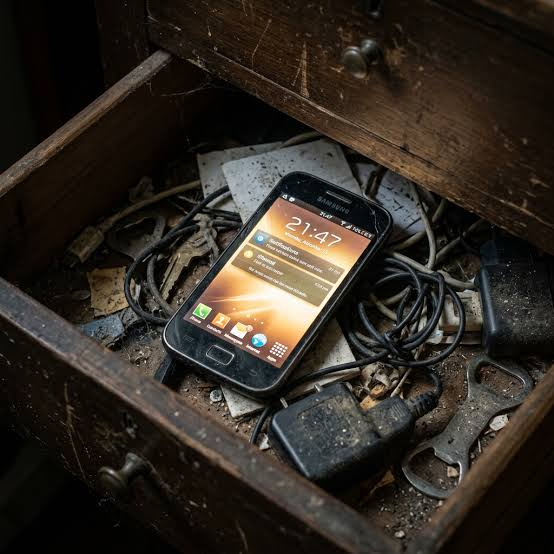
Why Cybercriminals Love Old Smartphones: The Hidden Risks of Using Outdated Devices
July 24, 2026
Com 0
By Jackson Godwin. Cybersecurity Analyst & Penetration Tester.
Why Cybercriminals Love Old Smartphones: The Hidden Risks of Using Outdated Devices
Disclaimer:This story is fictional but based on real cybersecurity principles. It is written to educate readers about smartphone security and the importance of software updates.
“It Still Works Perfectly.”
Last December, I visited my uncle during the holidays.
Like many family visits, the conversation started with food, football, and work.
Eventually, technology became the topic.
My uncle proudly removed his smartphone from his pocket and placed it on the table.
He smiled.
“I’ve been using this phone for almost seven years.”
I looked at it.
The screen had a few scratches.
The battery case had faded.
But surprisingly…
The phone still worked.
He opened WhatsApp.
He showed me Facebook.
He made a phone call.
Everything seemed normal.
Then he asked me a question I hear all the time.
“Why do people keep buying new phones? This one still works.”
At first glance…
He had a good point.
The Phone Didn’t Look Broken
The phone wasn’t freezing.
It wasn’t restarting unexpectedly.
The screen wasn’t cracked.
It connected to Wi-Fi.
It opened applications.
To most people, it looked perfectly fine.
But cybersecurity isn’t only about how a phone looks.
It’s also about what happens behind the scenes.
So I asked him another question.
“When was the last time your phone received a security update?”
He looked confused.
“Security update?”
I opened the settings menu.
Checked the software version.
Then I checked the security patch level.
The phone hadn’t received a security update in years.
That immediately changed the conversation.
The Problem Was Invisible
Most smartphone owners know when their battery is getting weak.
They know when the screen is damaged.
They know when storage is almost full.
Those problems are easy to notice.
Security problems are different.
You usually can’t see them.
Your phone may look perfectly healthy while quietly missing important protections that newer software versions include.
That’s what worried me.
Not because the phone was old.
But because it had stopped receiving important security updates.
Why Security Updates Matter
Many people believe software updates only add new features.
Sometimes they do.
But security updates have another important purpose.
They help fix known vulnerabilities that could otherwise be exploited.
Think of it like repairing a broken lock on your front door.
If you ignore the broken lock for years, it doesn’t automatically mean someone will break in.
But leaving it unfixed can increase your risk over time.
The same idea applies to smartphones.
As software evolves, security updates help address newly discovered issues.
Devices that no longer receive those updates may become less protected than supported devices.
“But Nobody Would Target Me.”
My uncle laughed.
Then he said something I’ve heard countless times.
“I’m not rich.”
“I’m not famous.”
“Why would hackers care about my phone?”
That question reflects one of the biggest misconceptions about cybersecurity.
Most cybercriminals aren’t specifically looking for one individual.
They’re often looking for opportunities.
If thousands—or even millions—of devices share the same unpatched weakness, attackers may try to exploit those devices on a broad scale rather than targeting one particular person.
In many cases, criminals don’t even know whose phone they’re trying to reach.
They simply know an outdated device may present fewer obstacles.
The Apps Were Still Working
My uncle smiled again.
“Everything still opens.”
And he was right.
WhatsApp worked.
Facebook worked.
The camera worked.
The browser worked.
From his perspective, there was no problem.
That’s what makes outdated smartphones so deceptive.
A phone can continue performing everyday tasks while quietly falling behind on security support.
The absence of visible problems doesn’t always mean the device is receiving ongoing protection.
Then I Looked at His Applications
As I reviewed the phone, I noticed something else.
Several applications hadn’t been updated in months.
Some were no longer supported.
Others displayed compatibility warnings.
One application hadn’t been opened in years.
It was simply sitting there.
Unused.
Forgotten.
Old applications, like old operating systems, may no longer receive improvements or security fixes.
Keeping software up to date—when updates are available—is one of the simplest ways to strengthen a smartphone’s security.
It Made Me Think About Millions of Smartphone Users
Later that evening, I kept thinking about our conversation.
My uncle wasn’t careless.
He wasn’t ignoring cybersecurity advice on purpose.
He simply believed:
“If the phone still works, it must still be safe.”
The truth is more complicated.
A phone can continue making calls, browsing the internet, and opening apps while no longer receiving the protection that newer devices enjoy.
That’s one reason cybersecurity professionals encourage users to pay attention not only to the age of a phone—but also to whether it still receives software and security updates.
The Conversation Had Only Just Begun
As we continued talking, my uncle asked another important question.
“So does that mean every old smartphone is dangerous?”
I smiled.
“Not necessarily.”
The answer wasn’t as simple as “old phones are bad.”
There were important details he needed to understand.
And those details completely changed the way he looked at the phone he had trusted for nearly seven years.
(Continue in Part 2, where we’ll explain why unsupported smartphones may face greater security risks, the mistakes many people make with older devices, and what you can do if you can’t afford a new phone yet.)