The Instagram Model Who Asked Me to Invest (Part 3)
July 30, 2026
Com 0
By Jackson Godwin. Cybersecurity Analyst & Penetration Tester.
I Refused to Pay Another Fee
The request for an additional “verification fee” didn’t make sense.
I asked customer support a simple question.
“If my account balance is genuine, why can’t you deduct the fee from the money already in my account?”
Instead of answering directly, they repeated the same explanation.
“Company policy requires a separate payment before withdrawals can be processed.”
That response immediately raised my suspicion.
I Started Researching the Platform
Instead of making another payment, I searched for the company’s name online.
The results were alarming.
I discovered:
Complaints from people who couldn’t withdraw their money.
Warnings on online forums describing the same scam.
Reviews claiming the platform showed fake profits.
Reports that customer support stopped responding once victims refused to pay more.
Everything pointed to the same conclusion.
The investment platform wasn’t legitimate.
I Looked at the Instagram Profile Again
For the first time, I viewed the account with a different perspective.
It suddenly looked less authentic.
I noticed:
Comments filled with generic compliments from suspicious-looking accounts.
Very few genuine conversations with followers.
Luxury photos that could have been taken anywhere.
No verifiable information about the person behind the account.
The glamorous lifestyle that had impressed me now looked like part of the marketing strategy.
I Confronted Her
I sent her a message.
“People online are saying this investment platform is a scam.”
She replied almost immediately.
“They’re just jealous because they lost money by making bad decisions.”
When I asked for proof that she had successfully withdrawn her profits, she avoided the question.
Instead, she changed the subject.
Then she said:
“If you don’t trust me, maybe we shouldn’t talk anymore.”
That emotional pressure confirmed what I already suspected.
The Truth Finally Appeared
The following morning, I tried visiting the investment website.
It no longer loaded.
The customer support email stopped working.
The Instagram account that had introduced me to the platform disappeared a few days later.
Everything vanished.
The relationship.
The platform.
The promises.
The only thing left was the lesson.
How the Scam Worked
Looking back, I understood the entire process.
It followed a clear pattern.
A convincing Instagram profile attracted attention.
Friendly conversations built trust over several weeks.
The influencer lifestyle created curiosity.
Investing was introduced naturally.
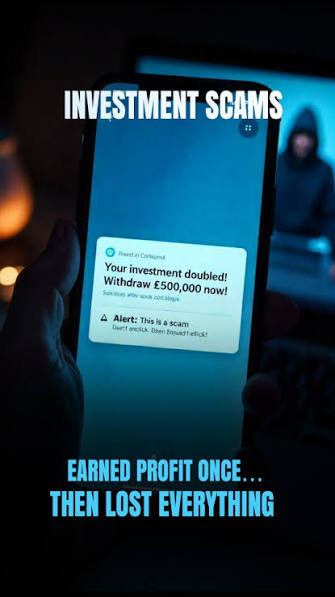
Fake profits encouraged larger deposits.
Withdrawal requests triggered endless fees.
Victims who kept paying lost even more money.
The investment wasn’t real.
The profits weren’t real.
The relationship probably wasn’t real either.
Warning Signs of Instagram Investment Scams
Here are the biggest warning signs I ignored.
🚩 Luxury Lifestyle Used as Proof
Expensive cars, holidays and designer clothes do not prove someone is a successful investor.
Social media only shows what people choose to share.
🚩 Private Investment Recommendations
Be cautious if someone you’ve only met online recommends one specific investment platform.
Always research independently.
🚩 Fake Profits
A dashboard showing increasing profits doesn’t prove your money is growing.
Fraudulent websites can display any numbers they want.
🚩 Withdrawal Problems
If a platform asks you to pay additional fees before releasing your own money, stop and investigate before sending anything else.
🚩 Emotional Pressure
Scammers often replace evidence with emotion.
Instead of answering questions, they may say:
“Don’t you trust me?”
“You’re overthinking it.”
“I was only trying to help.”
How to Protect Yourself
If someone on social media recommends an investment:
Verify whether the company is regulated.
Read independent reviews from multiple sources.
Never invest simply because an influencer recommends it.
Be cautious of guaranteed or unusually high returns.
Never pay additional fees just to withdraw your own funds.
Seek independent financial advice before making significant investment decisions.
Final Thoughts
The Instagram model didn’t steal my password.
She didn’t hack my phone.
She didn’t access my bank account.
She tried something much simpler.
She earned my trust.
Once trust was established, the investment opportunity seemed natural.
That’s what made the scam so dangerous.
The biggest lesson I learned was this:
Never confuse popularity on social media with credibility.
Followers can be bought.
Photos can be edited.
Profits can be faked.
But careful research and independent verification remain some of your strongest defences against online investment scams.
About the Author
Jackson Godwin is a Cybersecurity Consultant specialising in Vulnerability Assessment and Penetration Testing (VAPT), Governance, Risk and Compliance (GRC), ISO/IEC 27001, PCI DSS, Cloud Security, AI Security and Digital Risk Management.
Through JacksonTechnology.com.ng, he publishes cybersecurity awareness stories, ethical hacking tutorials, compliance guides, and practical online safety advice to help individuals and organisations recognise cyber threats, avoid online scams, and build safer digital habits.
His mission is to make cybersecurity practical, relatable, and accessible—one cyberstory at a time.