


By Jackson Godwin. Cybersecurity Analyst & Penetration Tester.
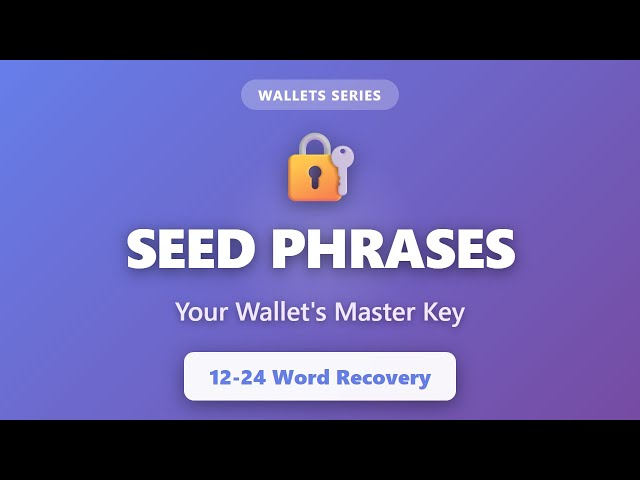
Why Would Anyone Want Twelve Random Words?
After ending the conversation, I couldn’t stop thinking about one question.
Why would someone work so hard to get my recovery phrase?
It wasn’t a password.
It wasn’t my bank PIN.
It wasn’t a One-Time Password (OTP).
It was simply twelve ordinary words.
Yet the stranger kept asking for them.
That made me realise something important.
Sometimes, the most valuable information doesn’t look valuable at all.
The Recovery Phrase Is the Master Key
Most cryptocurrency beginners believe their wallet password is the most important thing to protect.
I used to think the same.
But the recovery phrase is often even more important.
Think of it like this.
Imagine your house has:
- A front door key.
- A spare master key hidden in a secure location.
The front door key opens your house.
But the master key can replace every other key if you lose access.
A crypto wallet recovery phrase works in a similar way.
If someone has it, they may be able to restore access to the wallet on another compatible device.
That’s why protecting it is so important.
He Never Asked for My Password
Looking back, something became obvious.
The scammer never asked for:
- My wallet password.
- My email password.
- My phone PIN.
He wanted only one thing.
The recovery phrase.
That told me he knew exactly what he was doing.
Experienced scammers often ask only for the information that gives them the greatest advantage.
Building Trust Was Part of the Plan
The conversation didn’t begin with a scam.
It began with help.
He answered my questions.
He solved a small problem.
He was patient.
Friendly.
Professional.
Only after earning my confidence did he ask for the recovery phrase.
This is a common form of social engineering.
Instead of attacking your device, criminals try to influence your decisions.
Once they earn your trust, people are often more willing to share sensitive information.
He Sounded Like Official Support
One thing still amazed me.
His writing style looked professional.
He used technical language correctly.
He even referenced genuine cryptocurrency terminology.
If I hadn’t already known that recovery phrases must remain private, I might have believed he worked for the wallet provider.
That’s why it’s important to remember something.
A professional tone does not prove someone is legitimate.
Anyone can sound knowledgeable online.
Then I Checked the Official Website
After ending the chat, I visited the wallet provider’s official help centre.
I searched for:
“Recovery phrase security.”
The guidance was clear.
It repeatedly warned users:
- Never share your recovery phrase.
- Never enter it on unknown websites.
- Never send it through email or messaging apps.
- Customer support will not ask for it.
Reading that official advice confirmed what my instincts had already told me.
The person messaging me wasn’t trying to help.
He was trying to gain access to my wallet.
Why Recovery Phrase Scams Work
Many victims are new to cryptocurrency.
They’ve just created their first wallet.
They don’t fully understand how recovery phrases work.
When someone claiming to be “technical support” asks for those words, they assume it’s part of the troubleshooting process.
Unfortunately, that’s exactly what scammers rely on.
They target uncertainty.
Not technical weakness.
Knowledge is often the best defence.
The more you understand your wallet, the harder it becomes for someone to deceive you.
More Than One Scammer Uses This Trick
As I researched further, I discovered that this wasn’t an isolated incident.
Scammers ask for recovery phrases in many different ways.
For example:
- Fake wallet support chats.
- Telegram messages.
- Discord communities.
- WhatsApp conversations.
- Social media comments.
- Fake customer support websites.
- Phishing emails pretending to be crypto companies.
Different platforms.
The same objective.
Convince victims to reveal the one thing that should remain private.
I Almost Ignored My Instincts
When I think back to that conversation, one moment stands out.
For a split second, I actually considered sending the recovery phrase.
Not because I wanted to.
But because the scammer sounded so convincing.
That’s why I now tell every new cryptocurrency user:
If something feels wrong…
Pause.
Take a breath.
Visit the official website.
Verify independently.
A few extra minutes of research can prevent a lifetime of regret.
I Had One More Question
Although I now understood why scammers wanted the recovery phrase, another question remained.
If sharing twelve simple words could be so dangerous…
How should people protect them properly?
The answer turned out to be simpler than I expected.
In the final part of this article, I’ll explain the safest ways to store a recovery phrase, the mistakes many cryptocurrency users make without realising it, the warning signs of fake wallet support, and a practical checklist to help keep your crypto assets secure.
Continue Reading: The Day Someone Asked for My 12-Word Recovery Phrase (Part 3)