


By Jackson Godwin. Cybersecurity Analyst & Penetration Tester.
The One Decision That Saved Me
When I finally spoke to my real brother, I realised how close I had come to becoming a victim.
If I had reacted emotionally instead of thinking clearly, I could have transferred money to a criminal within minutes.
The scammer didn’t hack my phone.
He didn’t install malware.
He didn’t steal my password.
He simply used technology to imitate someone I trusted.
That experience taught me that the next generation of cyber scams won’t always look suspicious.
Sometimes, they’ll sound exactly like someone you love.
The Biggest Warning Signs I Almost Missed
Looking back, there were several clues that something wasn’t right.
Here are the warning signs everyone should know.
🚩 The Call Created Immediate Panic
The caller wanted me to believe there was an emergency.
He repeatedly said things like:
- “Please hurry.”
- “There’s no time.”
- “I’ll explain later.”
Scammers know that panic makes people think emotionally instead of logically.
Whenever someone pressures you to act immediately, pause before making any financial decision.
🚩 He Wanted Me to Act Without Verifying
The caller became uncomfortable when I suggested calling my brother directly.
That was a major warning sign.
A genuine family member would never object to you confirming their identity.
Anyone who discourages verification should immediately raise suspicion.
🚩 He Avoided Specific Questions
When I asked simple questions like:
- “Where are you?”
- “Who are you with?”
- “What exactly happened?”
The answers became vague.
Instead of responding directly, he returned to the same request.
“Just send the money.”
Scammers often steer conversations back to the payment because that’s their real objective.
🚩 Everything Was About Urgency
Notice how the conversation followed a pattern:
Problem.
Pressure.
Payment.
There was very little discussion beyond those three things.
That’s common in many social engineering attacks.
The less time victims have to think, the greater the chance they’ll comply.
How to Protect Yourself From AI Voice Scams
Technology will continue to improve.
That means we all need better habits.
Here are some practical steps.
Always Verify Independently
If someone calls asking for money—even if the voice sounds familiar—contact them using a phone number you already know belongs to them.
Never rely solely on the incoming call.
Ask Personal Questions
If something feels unusual, ask a question that only the real person is likely to answer.
For example:
- Where did we last meet?
- What’s our family nickname?
- What did we talk about yesterday?
These aren’t foolproof, but they can slow down a scammer and give you time to think.
Create a Family Safe Word
Families can agree on a private word or phrase that’s never shared publicly.
If someone calls during an emergency, asking for the safe word can provide another layer of verification.
Choose something memorable but difficult for strangers to guess.
Don’t Let Panic Make Decisions
Emergencies naturally create strong emotions.
But whenever money is involved:
Pause.
Think.
Verify.
Even waiting two or three minutes before acting can prevent a costly mistake.
Protect Your Personal Information
While sharing family photos and videos online is common, remember that anything made public may be viewed by strangers.
Review your privacy settings regularly and think carefully about what information is publicly available.
Frequently Asked Questions
Can AI really copy someone’s voice?
Yes.
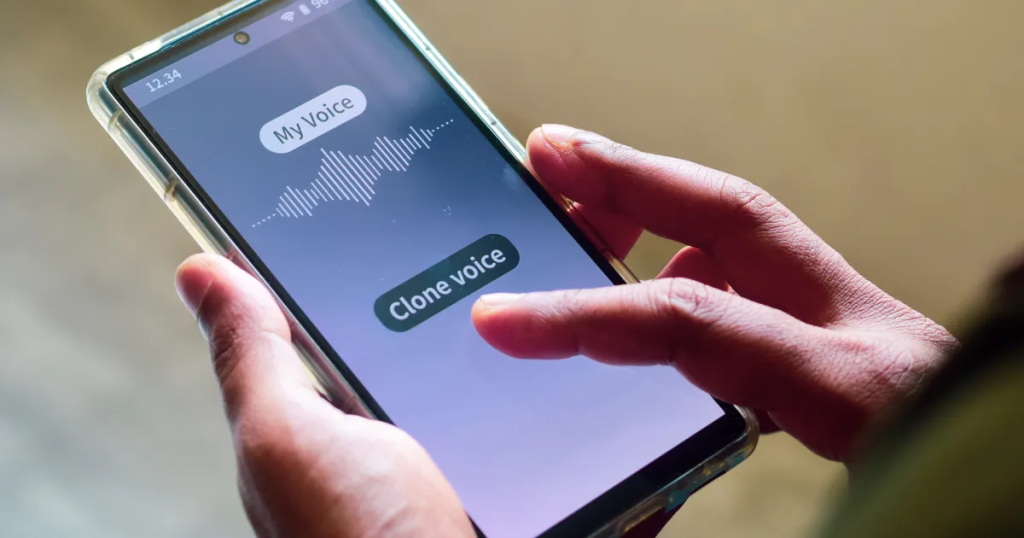
Modern AI systems can generate speech that resembles a person’s voice after analysing audio recordings.
The quality varies depending on the technology and the amount of available audio.
Are these scams becoming more common?
Reports of AI-assisted fraud have increased in recent years as voice-cloning tools have become more accessible.
Awareness and verification are becoming increasingly important.
What should I do if I receive a suspicious emergency call?
Don’t panic.
End the conversation politely if necessary.
Then contact the person directly using a trusted phone number or another communication method you already know is genuine.
Should I stop answering unknown calls?
Not necessarily.
The important habit is not to trust unexpected requests involving money or sensitive information without verifying them independently.
Final Thoughts
Artificial Intelligence is an incredible technology.
It can improve healthcare.
Education.
Business.
Accessibility.
But like many powerful technologies, it can also be abused by criminals.
The fake call I received wasn’t dangerous because of the software.
It was dangerous because it targeted something every person values.
Trust.
The next time you receive an unexpected call from someone claiming to be a family member, friend, colleague, or bank representative asking for urgent financial help, remember these four words:
Verify before you act.
One phone call.
One verification.
One extra minute.
That small habit could save you from becoming the next victim of an AI-powered scam.
About the Author
Jackson Godwin is a Cybersecurity Consultant specialising in Vulnerability Assessment and Penetration Testing (VAPT), Governance, Risk and Compliance (GRC), ISO/IEC 27001, PCI DSS, Cloud Security, AI Security, and Digital Risk Management.
With years of experience helping organisations identify vulnerabilities, strengthen security controls, and improve cyber resilience, Jackson is passionate about making cybersecurity practical, easy to understand, and accessible to everyone.
Through JacksonTechnology.com.ng, he publishes cybersecurity awareness stories, ethical hacking tutorials, compliance guides, cloud security insights, AI security resources, and practical online safety tips to help individuals and businesses stay protected against evolving cyber threats.
His mission is to educate, empower, and inspire safer digital habits—one cybersecurity story at a time.