Beyond the Vulnerability Scan: Why Security Professionals Need TOGAF for Enterprise Resilience
July 13, 2026
Com 0
By Jackson Godwin. Cybersecurity Analyst & Penetration Tester.
When most cybersecurity professionals think about protecting an organization, they often focus on technical activities such as vulnerability assessments, penetration testing, security monitoring, incident response, and compliance audits. While these activities are essential, they represent only one part of the organization’s overall security strategy.
A vulnerability scan can reveal outdated software, missing patches, or weak configurations. A penetration test can demonstrate how attackers might exploit those weaknesses. However, these assessments rarely answer broader questions, such as:
Why does this vulnerable system exist?
How does it support critical business processes?
What other systems depend on it?
What happens to the business if it fails?
How can security decisions align with long-term business objectives?
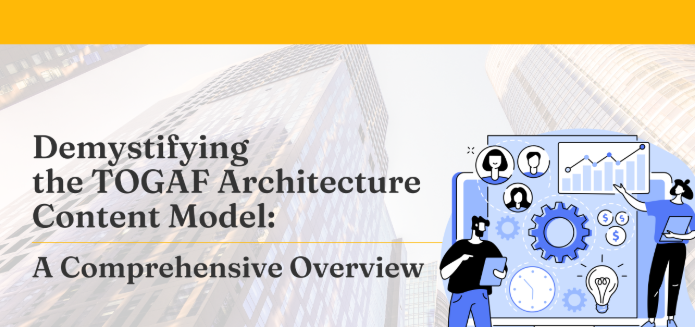
These questions fall within the domain of Enterprise Architecture (EA). One of the world’s leading frameworks for Enterprise Architecture is TOGAF (The Open Group Architecture Framework). Understanding TOGAF helps cybersecurity professionals move beyond identifying vulnerabilities and begin contributing to the design of secure, resilient, and business-aligned technology environments.
The Limitations of Traditional Security Assessments
Imagine you perform a penetration test on an organization’s customer portal and discover several critical vulnerabilities. Your report recommends immediate remediation.
While your findings are technically accurate, management may ask:
Can we patch the system immediately without disrupting business?
Which business services rely on this application?
Will fixing the issue affect other systems?
Is replacing the application a better long-term solution?
Technical assessments alone often cannot answer these strategic questions. This is where Enterprise Architecture becomes invaluable.
What Is TOGAF?
TOGAF (The Open Group Architecture Framework) is a globally recognized framework that helps organizations design, implement, govern, and manage enterprise architecture.
Rather than focusing solely on technology, TOGAF ensures that business strategy, processes, information, applications, and technology work together to support organizational goals.
TOGAF divides enterprise architecture into four domains:
1. Business Architecture
Defines business goals, processes, organizational structure, and capabilities.
2. Data Architecture
Focuses on how information is collected, stored, shared, and governed.
3. Application Architecture
Describes how applications interact and support business operations.
4. Technology Architecture
Defines the infrastructure, networks, cloud platforms, operating systems, and technology standards that enable business services.
Understanding these domains helps security professionals identify not only technical weaknesses but also architectural risks.
Why Cybersecurity Professionals Should Learn TOGAF
Many security teams focus on identifying vulnerabilities. Enterprise architects focus on ensuring that systems are designed to support business objectives securely and sustainably.
When cybersecurity professionals understand TOGAF, they gain the ability to:
Align security initiatives with business strategy.
Participate in digital transformation projects.
Improve security architecture decisions.
Communicate effectively with executives and business leaders.
Reduce architectural complexity.
Design secure systems from the beginning instead of adding security later.
This broader perspective makes cybersecurity more proactive than reactive.
Security Is More Than Technology
Consider a company migrating from an on-premises data center to the cloud.
A penetration tester may evaluate cloud configurations after migration. An enterprise architect, however, is involved much earlier by helping answer questions such as:
Which applications should move to the cloud?
Which systems should remain on-premises?
How should identity management work?
What regulatory requirements apply?
Which cloud services best support business objectives?
How should security be integrated into the new architecture?
By participating early, cybersecurity professionals can influence secure design rather than simply identifying issues after deployment.
TOGAF Supports Cyber Resilience
Cyber resilience goes beyond preventing attacks. It focuses on ensuring that organizations can continue operating during and after security incidents.
Enterprise Architecture contributes to resilience by helping organizations:
Identify critical business services.
Eliminate unnecessary complexity.
Standardize technologies.
Improve disaster recovery planning.
Strengthen business continuity.
Support secure cloud adoption.
Enhance governance.
This strategic approach complements traditional cybersecurity activities.
TOGAF and Zero Trust
Zero Trust Architecture requires organizations to continuously verify users, devices, and applications rather than relying on traditional network boundaries.
Enterprise Architecture helps define:
Identity management strategies.
Application relationships.
Data flows.
Network segmentation.
Trust boundaries.
These architectural insights make Zero Trust implementation more effective and sustainable.
Bridging the Gap Between Security and Business
One of the greatest challenges in cybersecurity is communicating with executives.
Technical reports filled with CVSS scores and vulnerability details may not resonate with business leaders.
Enterprise Architecture provides a common language that connects technical security issues with business outcomes.
Instead of saying:
“The server is vulnerable to Remote Code Execution.”
You can explain:
“This vulnerability affects the customer payment platform, creating operational and financial risks that could interrupt revenue generation.”
This business-focused communication helps decision-makers prioritize security investments.
Practical Benefits of Learning TOGAF
Cybersecurity professionals with Enterprise Architecture knowledge often contribute to:
Cloud migration projects
Digital transformation initiatives
Technology modernization
Security architecture reviews
Risk management programs
Governance frameworks
Business continuity planning
Compliance initiatives
These responsibilities expand career opportunities beyond traditional technical security roles.
Is TOGAF Worth Learning?
If your goal is to become a cybersecurity leader, security architect, consultant, or Chief Information Security Officer (CISO), understanding Enterprise Architecture is a valuable investment.
TOGAF helps professionals:
Think strategically.
Understand business priorities.
Design secure technology environments.
Improve governance.
Communicate with executives.
Support long-term organizational resilience.
While technical skills remain essential, organizations increasingly value professionals who can bridge the gap between technology and business.
Combining technical expertise with architectural thinking creates a more complete cybersecurity professional.
Final Thoughts
Vulnerability assessments and penetration tests are critical components of cybersecurity, but they represent only part of the bigger picture. Organizations need professionals who understand not only how to identify security weaknesses but also how technology supports business strategy.
TOGAF provides a structured approach for designing secure, resilient, and scalable enterprise environments. For cybersecurity professionals, learning Enterprise Architecture is not about replacing technical skills—it is about enhancing them with strategic thinking.
In an era of cloud computing, AI, digital transformation, and evolving cyber threats, the professionals who can connect security with business objectives will be the ones leading the future of cybersecurity.
Frequently Asked Questions (FAQ)
Is TOGAF useful for cybersecurity professionals?
Yes. TOGAF helps cybersecurity professionals understand how technology, business processes, applications, and data fit together, enabling better security decisions and stronger alignment with business objectives.
Do I need TOGAF to become a penetration tester?
No. TOGAF is not required for penetration testing, but it is valuable for professionals who want to move into roles such as Security Architect, Enterprise Architect, Cybersecurity Consultant, or CISO.
Does TOGAF replace technical cybersecurity skills?
No. TOGAF complements technical skills by providing a strategic framework for designing and governing secure enterprise environments.
About the Author
Jackson Godwin is a Cybersecurity Consultant specializing in Vulnerability Assessment and Penetration Testing (VAPT), Governance, Risk and Compliance (GRC), Information Security, Enterprise Security Assessments, and ISO/IEC 27001 implementation. Through JacksonTechnology.com.ng, he shares practical cybersecurity tutorials, compliance guides, and professional insights to help individuals and organizations build stronger cyber resilience.
This topic is an excellent fit for your blog because it combines enterprise architecture and cybersecurity, a niche with relatively lower competition than general cybersecurity topics while attracting professionals, consultants, and decision-makers who search for strategic security content.
Today 7:58 AM
Do you think I can turn all this my articule into research if I want to do PHD
Yes—but not in their current form.
Your articles are mostly educational blog posts. A PhD requires original research that creates new knowledge, not just explanations of existing concepts.
The good news is that many of your topics could become the foundation for future research.
For example:
Your Blog Article
Possible PhD Research Topic
ISO 27001 Non-Conformities
An empirical study of the most common ISO 27001 implementation failures in African fintechs
Third-Party Risk
A framework for improving third-party cyber risk management in developing economies
SIM Swap Fraud
Machine learning-based detection of SIM swap fraud in mobile banking
ISO 8583
Security analysis of ISO 8583 payment systems in Nigerian financial institutions
Enterprise Architecture & TOGAF
Enterprise architecture as a driver of cyber resilience in financial services
Microsoft Sentinel
AI-assisted threat detection using Microsoft Sentinel in hybrid cloud environments
QR Phishing (Quishing)
Detection and prevention techniques for QR-code phishing attacks
Cloud Security
Risk assessment framework for multi-cloud security adoption
For a PhD, you would need to:
Review existing academic literature.
Identify a gap that hasn’t been adequately studied.
Formulate research questions and hypotheses.
Collect original data (through experiments, surveys, interviews, case studies, or system design).
Analyze the data using accepted research methods.
Draw conclusions that contribute new knowledge.
Looking at the articles you’ve been writing, I notice a pattern. You seem especially interested in:
Banking cybersecurity
Governance, Risk, and Compliance (GRC)
ISO 27001
Enterprise Architecture
Cloud security
Digital payments
Those areas fit together well and could support a coherent PhD research agenda.
For example, a strong PhD topic might be:
An Enterprise Architecture Framework for Enhancing Cyber Resilience in Financial Institutions: Integrating TOGAF, ISO/IEC 27001, and Zero Trust Principles
Or:
A Risk-Based Governance Framework for Strengthening Cybersecurity in Digital Banking Systems
These are the kinds of topics that allow you to build on your professional experience while conducting original research.
So keep writing your blog. It helps you organize your thinking, build your reputation, and identify questions worth investigating. When you’re ready to start a PhD, you’ll already have a strong foundation of ideas—you’ll just need to transform those ideas into rigorous, evidence-based research rather than explanatory articles.