


By Jackson Godwin. Cybersecurity Analyst & Penetration Tester.
I Didn’t Send the Money Immediately
When they asked for financial help, I didn’t say yes.
But I didn’t say no either.
Instead, I told them I needed some time.
Their response surprised me.
Rather than becoming angry, they remained calm.
“I completely understand.”
“I know it’s a lot to ask.”
That response made them seem even more genuine.
Looking back, I realised they had likely expected hesitation.
The Story Became More Emotional
Over the next two days, they shared more details.
According to them:
- Their wallet had been stolen.
- They couldn’t access their bank account.
- They were stranded in another country.
- They had no family nearby.
Every new message made the situation sound more desperate.
The request wasn’t just about money anymore.
It was about compassion.
The scammer wanted me to feel responsible for helping them.
They Promised to Repay Everything
To make the request seem safe, they reassured me.
“I’ll pay you back next week.”
“I’ll even send you extra for helping me.”
They also offered to send copies of what they claimed were:
- Their passport.
- Airline tickets.
- Hotel reservations.
At first glance, everything looked convincing.
But documents can be edited or stolen just as easily as profile photos.
I Suggested a Video Call Again
This time, I insisted.
I said,
“Before I send any money, let’s have a quick video call.”
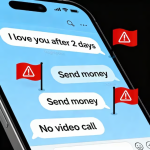
Suddenly, the excuses returned.
“The hotel Wi-Fi is broken.”
“My phone camera stopped working.”
“I’m too embarrassed because I’ve been crying.”
Every excuse avoided the one thing that could verify their identity.
A real conversation face-to-face.
I Decided to Investigate
Instead of arguing, I started checking the information they had shared.
I performed a reverse image search on one of the profile photos.
Within seconds, I discovered something unexpected.
The same photograph appeared on several unrelated websites under different names.
The person in the picture was real.
But they weren’t the person messaging me.
Their photographs had been stolen.
The Pieces Finally Came Together
Everything suddenly made sense.
The perfect profile.
The daily conversations.
The emotional connection.
The refusal to video call.
The urgent financial emergency.
None of it had happened by accident.
It was a carefully planned social engineering attack.
The relationship wasn’t the goal.
My trust was.
I Stopped Responding
Once I realised what was happening, I stopped the conversation.
Within hours, the messages changed.
The friendly tone disappeared.
The scammer became impatient.
Then they tried making me feel guilty.
“I thought you cared about me.”
“I can’t believe you’d abandon me.”
When those tactics failed, they stopped replying altogether.
The relationship ended as quickly as it had begun.
I Realised Anyone Could Be Targeted
This experience taught me something important.
Romance scammers don’t only target people who are lonely.
They target people who are kind.
People who are willing to help.
People who believe they’re building a genuine connection.
The attack wasn’t technical.
It was psychological.
In the final part of this article, I’ll explain the biggest warning signs of online romance scams, share practical ways to verify someone’s identity safely, and reveal the simple rule I now follow before trusting anyone I meet online.
Continue Reading: The Dating App Match Who Was Actually a Cybercriminal (Part 3)