



By Jackson Godwin.Cybersecurity Analyst & Penetration Tester.
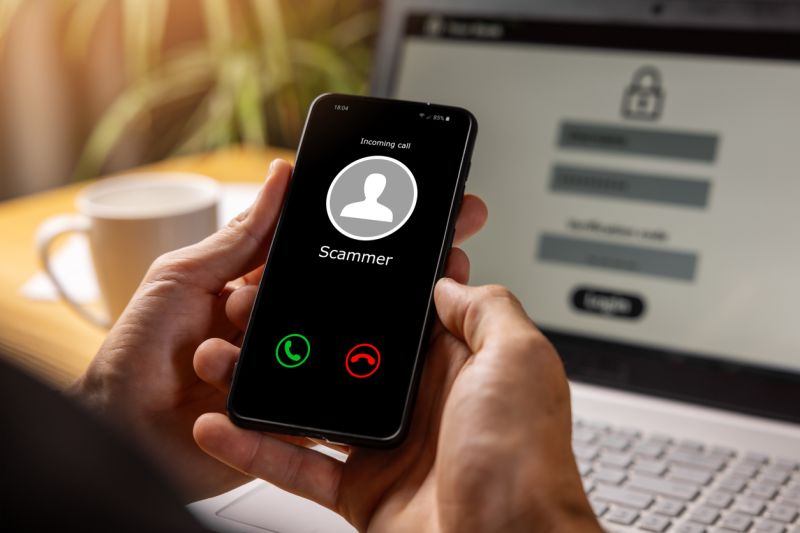
I Asked One Simple Question
The caller sounded confident.
Professional.
Patient.
If someone had listened to only the first five minutes of our conversation, they probably would have believed he genuinely worked for my bank.
But before answering his next question, I asked him something very simple.
“Can I call you back using the official customer service number on my bank’s website?”
There was a brief silence.
Then everything started to change.
His Tone Was Suddenly Different
Until that moment, he had been calm and reassuring.
Now he sounded slightly irritated.
He quickly replied,
“That won’t be necessary.”
Then he added,
“We’re handling this case directly from our fraud department.”
He insisted that if I ended the call, the investigation might be delayed.
That response immediately raised another red flag.
A genuine bank employee should never discourage a customer from contacting the bank through its official channels.
The Conversation Became More Urgent
The caller suddenly started creating pressure.
“We need to secure your account immediately.”
“Please stay on the line.”
“This is very time-sensitive.”
The urgency increased with every sentence.
Looking back, I realised he wasn’t trying to protect my account.
He was trying to stop me from thinking.
Then He Asked Me to Open My Banking App
He instructed me to log in while keeping him on the phone.
Next, he asked me to read the information displayed inside the app.
At first, the requests seemed harmless.
But then he said something that completely changed my opinion of the call.
“You’ll receive a verification code shortly. Read it to me so I can complete the security update.”
That was the moment I knew something was wrong.
No Legitimate Employee Needs Your Verification Code
One-Time Passwords (OTPs) and verification codes are designed to confirm your identity when you’re performing an action.
They’re not meant to be shared with someone who calls you unexpectedly.
If another person asks you to reveal one of these codes, it’s a strong sign that they’re trying to authorise something in your name.
I hadn’t received a code yet—but if I had, I certainly wasn’t going to read it aloud.
I Ended the Call
Instead of continuing the conversation, I politely said,
“I’ll contact the bank myself.”
Before he could respond, I ended the call.
Then I immediately opened my bank’s official mobile app.
Everything looked normal.
No fraud alerts.
No account restrictions.
No unusual notifications.
Still, I wanted certainty.
I Called the Official Number
Using the customer service number listed on my bank’s official website, I contacted the bank.
After confirming my identity, I explained exactly what had happened.
The representative listened carefully before saying,
“That was not one of our staff members.”
They confirmed that:
- They had not called me.
- My account was not under investigation.
- They would never ask me to reveal security codes over the phone.
At that moment, every piece of the puzzle came together.
The Scam Was Designed Around Trust
The criminal had done his homework.
He knew my name.
He knew which bank I used.
He sounded knowledgeable.
Professional.
Helpful.
His goal wasn’t to frighten me immediately.
His goal was to earn my trust first.
Only after gaining that trust did he begin asking for information that could have been used to access my account.
Why These Scams Can Be So Convincing
Many people assume that scammers are obvious.
Poor grammar.
Aggressive behaviour.
Strange accents.
But modern fraudsters often behave differently.
They remain calm.
Polite.
Patient.
They sound exactly like experienced customer service representatives.
That’s what makes impersonation scams so dangerous.
The attack isn’t against your phone.
It’s against your confidence in someone who appears to be helping you.
In the final part of this article, I’ll explain the biggest warning signs of bank impersonation scams, share practical ways to protect your accounts, and reveal the simple rule I now follow whenever someone claims to be calling from my bank.
Continue Reading: Someone Pretended to Be My Bank Manager (Part 3)