InfoSploit – Information Gathering Tool ( Educational Lab)
July 20, 2026
Com 0
By Jackson Godwin. Cybersecurity Analyst & Penetration Tester.
Disclaimer This article is for educational and informational purposes only. InfoSploit is a legitimate information-gathering tool intended for authorized security testing, research, and personal use. The author does not condone or encourage any illegal or malicious activities. Users are solely responsible for ensuring they have proper authorization before using this tool on any system or network
Hey everyone! In this article, we’re going to look at a super lightweight information-gathering tool called “InfoSploit.” What makes it great is how easy it is to install and run—plus, it works on Linux, Windows, and even Android (via Termux). It’s built using both Bash and Python, making it versatile and accessible.
Installation
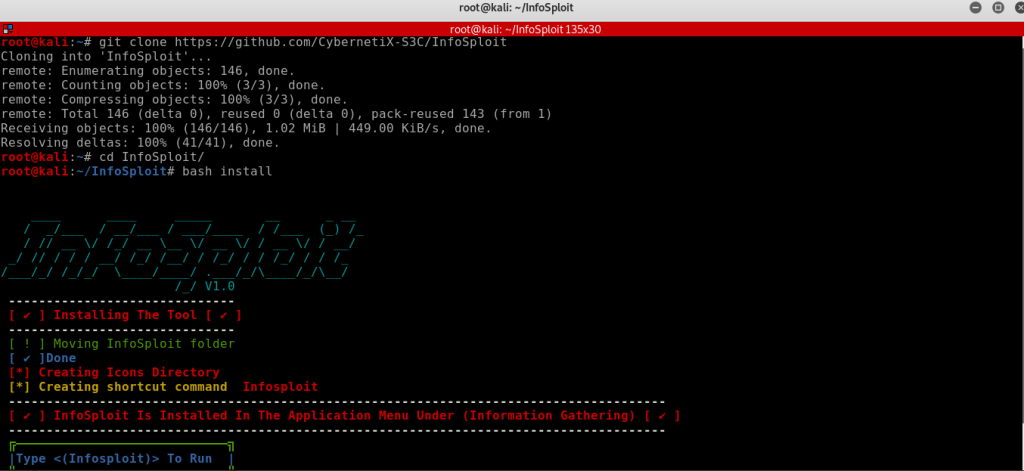
First of all, we will download this tool from GitHub by using the git command. After downloading is done, then we will go to the directory of this tool and execute the bash command in order to install this tool completely. If you have installed all the requirements, then this tool will be installed soon, otherwise it will take some time. But after installing, it will give us the command to boot this tool directly from anywhere.
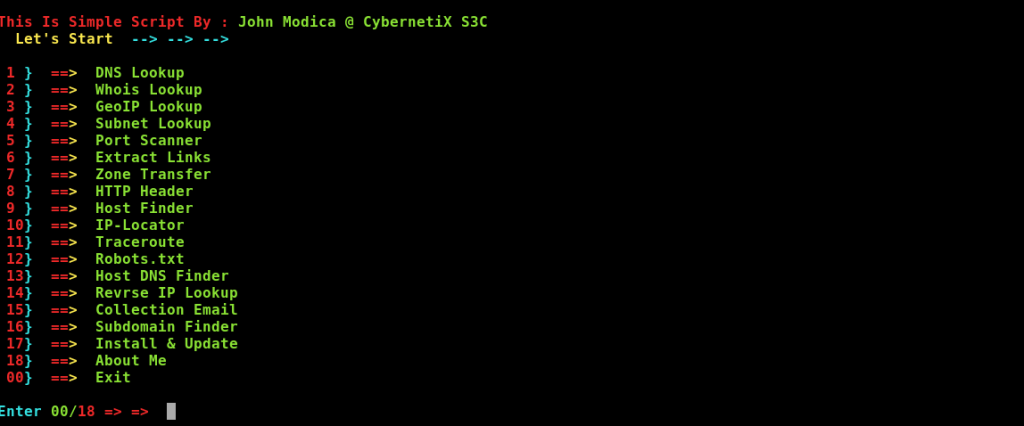
Now you can see all the available special features in the tool, through which we can have a good footprint against any target.
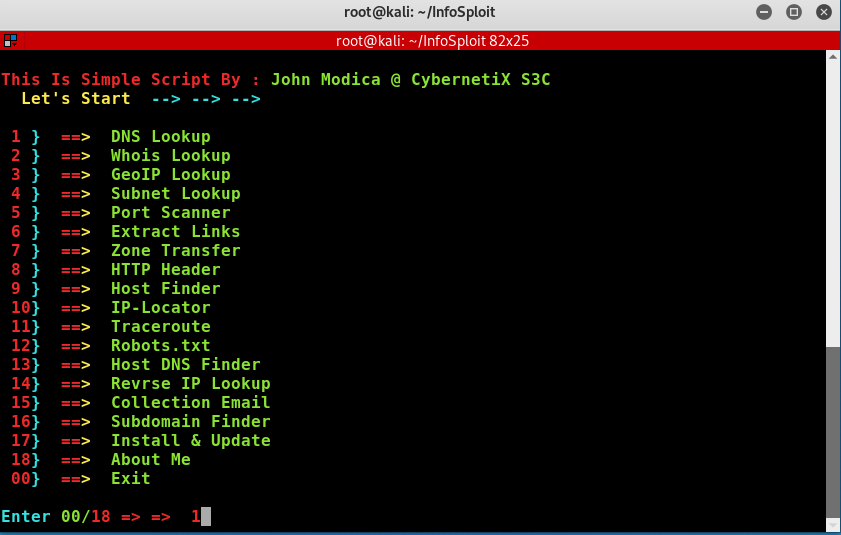
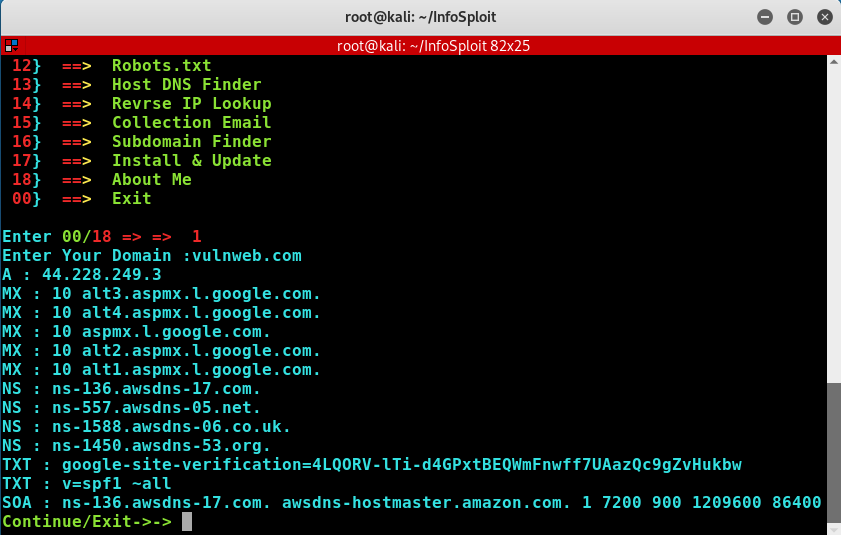
We can control this tool numerically, as you can see in the image below. After selecting the first option, it dumps all DNS records of the target web application.
Security Recommendations
Conduct information gathering only with proper authorization.
Minimize publicly exposed information that could assist attackers.
Regularly review DNS, WHOIS, and publicly available records for unnecessary data exposure.
Implement security headers and secure configurations on public-facing services.
Maintain an up-to-date inventory of internet-facing assets.
Train employees on the risks of oversharing organizational information online.
Detection Tips
Monitor for excessive reconnaissance activity against your public services.
Review web server logs for repeated requests from unknown IP addresses.
Monitor DNS queries and external scans targeting your domains.
Use intrusion detection and web application firewalls (WAFs) to identify suspicious reconnaissance patterns.
Perform regular OSINT assessments to understand what information is publicly exposed.
Ethical Use Notice
Educational Purpose Only: This article is intended for cybersecurity education and authorized security assessments. InfoSploit should only be used to gather publicly available information from systems you own or have explicit permission to assess. Unauthorized reconnaissance may violate applicable laws, organizational policies, or terms of service.
Conclusion
Information gathering is a fundamental phase of every cybersecurity assessment. Tools such as InfoSploit help security professionals understand an organization’s public attack surface, identify exposed assets, and improve defensive security when used responsibly and with proper authorization.
About the Author
Jackson Godwin is a Cybersecurity Consultant specializing in Vulnerability Assessment and Penetration Testing (VAPT), Governance, Risk and Compliance (GRC), PCI DSS, ISO/IEC 27001, Cloud Security, and Enterprise Security. Through JacksonTechnology.com.ng, he publishes practical cybersecurity tutorials, compliance checklists, penetration testing guides, and security resources to help organizations improve their cyber resilience.
Disclaimer The information and tools provided in this article are intended solely for educational purposes, ethical security research, and authorized penetration testing. InfoSploit is designed to help security professionals and enthusiasts understand system vulnerabilities and improve defensive measures.
The author and publisher assume no responsibility or liability for any misuse, damage, or legal consequences arising from the use of this tool. It is the user’s obligation to comply with all applicable local, national, and international laws and to obtain explicit written permission from system owners before conducting any testing. Use responsibly.