



By Jackson Godwin. Cybersecurity Analyst & Penetration Tester .
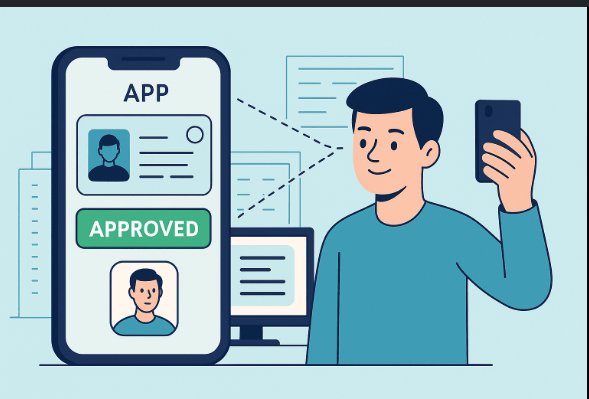
You decide to open a new bank account online.
Instead of visiting a branch, the bank asks you to:
- Upload your ID card.
- Take a selfie.
- Turn your head left and right.
- Blink several times.
- Smile at the camera.
Within minutes, your identity is verified.
This technology is known as Know Your Customer (KYC) liveness detection, and it has become one of the most important security controls in digital banking.
Unfortunately, cybercriminals are also evolving. Using AI-generated images, deepfake technology, and stolen identity documents, some fraudsters attempt to trick identity verification systems.
In this article, we’ll explain how KYC liveness detection works, how criminals try to bypass it, and the measures financial institutions are taking to defend against these attacks.
What Is KYC Liveness Detection?
KYC (Know Your Customer) is the process banks and financial institutions use to verify a customer’s identity before providing financial services.
Liveness detection is an additional security layer designed to determine whether the person presenting their face is a real, live human being—not simply a photograph, replayed video, or manipulated digital image.
Its purpose is to reduce identity fraud during remote account opening and online verification.
Why Banks Use Liveness Detection
Banks increasingly rely on digital onboarding. Customers expect to open accounts, apply for loans, and access services without visiting a branch.
Liveness detection helps institutions:
- Verify customer identity remotely.
- Reduce identity theft.
- Prevent fraudulent account creation.
- Meet regulatory KYC and anti-money laundering (AML) requirements.
- Improve trust in digital banking services.
How Criminals Attempt to Bypass KYC Systems
Criminals continually look for ways to defeat identity verification controls. Some reported techniques include:
1. AI-Generated Deepfakes
Advances in artificial intelligence have made it possible to create convincing synthetic images or videos that imitate a person’s face or expressions.
Some fraud attempts involve using manipulated media to impersonate someone else during identity verification.
2. Stolen Identity Documents
Fraudsters may combine stolen or forged identity documents with other deceptive techniques in an attempt to create fake accounts.
3. Replay Attacks
Instead of appearing live, an attacker may attempt to present previously recorded video or images during verification.
Modern liveness detection systems are specifically designed to detect many forms of replay attacks.
4. Social Engineering
Some criminals trick legitimate users into completing identity verification on their behalf without understanding how their biometric information will be used.
How Banks Defend Against These Threats
Financial institutions continuously improve identity verification systems.
Common security measures include:
Passive Liveness Detection
The system analyzes subtle characteristics—such as natural facial movements, lighting, depth, and texture—without requiring many user actions.
Active Liveness Detection
Customers may be asked to blink, smile, turn their head, or follow random on-screen instructions that are difficult to predict in advance.
AI-Based Fraud Detection
Machine learning models analyze biometric sessions for signs of manipulation, synthetic media, or suspicious patterns.
Device and Behavioral Analysis
Banks may also evaluate:
- Device reputation.
- IP address consistency.
- Geolocation.
- Typing and interaction patterns.
- Account creation behavior.
Rather than relying on a single check, many institutions combine multiple signals to improve fraud detection.
Warning Signs for Customers
Although banks provide strong protections, customers also play an important role.
Be cautious if someone asks you to:
- Record verification videos for another person.
- Share selfies or identity documents through messaging apps.
- Complete identity verification in exchange for money.
- Upload your ID to unknown websites.
Only complete identity verification through official banking applications or websites.
How to Protect Your Identity
To reduce your risk:
- Keep identity documents secure.
- Avoid posting high-quality images of passports or national IDs online.
- Enable multi-factor authentication on financial accounts.
- Be cautious of phishing emails and fake banking websites.
- Verify that you’re using the bank’s official application before completing identity verification.
- Report suspected identity theft immediately.
The Future of Identity Verification
As AI technology becomes more powerful, banks are investing in stronger defenses, including:
- Advanced biometric verification.
- Multi-modal authentication (combining face, voice, and device signals).
- Continuous fraud monitoring.
- AI systems trained to recognize synthetic media.
- Behavioral analytics that detect unusual activity after account creation.
Identity verification is becoming an ongoing security process rather than a one-time check.
Final Thoughts
KYC liveness detection has transformed digital banking by making remote identity verification faster and more convenient. At the same time, criminals continue to explore new ways to commit identity fraud using AI-generated media and stolen personal information.
Financial institutions are responding with increasingly sophisticated detection technologies, but customers remain an essential part of the security process. By protecting your identity documents, using official banking channels, and staying alert to fraud attempts, you can help reduce the risk of identity theft.
Understanding how these systems work not only improves personal security but also highlights the ongoing battle between financial institutions and increasingly sophisticated cybercriminals.
Frequently Asked Questions (FAQ)
What is KYC liveness detection?
KYC liveness detection is a security technology that helps verify that the person completing digital identity verification is physically present and not using a photograph, replayed video, or other spoofing technique.
Can deepfakes bypass all KYC systems?
No. While deepfake technology presents a growing challenge, many modern identity verification systems use multiple layers of security designed to detect manipulation. No system is perfect, which is why banks continuously improve their defenses.
Is facial recognition alone enough?
Many financial institutions combine facial recognition with additional security measures such as document verification, behavioral analysis, device intelligence, and fraud detection models to improve accuracy.
About the Author
Jackson Godwin is a Cybersecurity Consultant specializing in Vulnerability Assessment and Penetration Testing (VAPT), Governance, Risk and Compliance (GRC), Information Security, and Banking Cybersecurity. Through JacksonTechnology.com.ng, he publishes practical cybersecurity tutorials, fraud awareness guides, and compliance resources to help individuals and organizations strengthen their digital security