By Jackson Godwin. Cybersecurity Analyst & Penetration Tester.
The Biggest Lesson I Learned
After ending the phone call, I sat quietly for a few minutes.
The scammer hadn’t shouted.
He hadn’t threatened me.
He hadn’t tried to install malware on my computer.
Instead, he almost convinced me through something much simpler.
Trust.
He sounded professional.
He spoke confidently.
He knew enough about cryptocurrency to appear legitimate.
If I hadn’t stopped to verify independently, I might have handed him exactly what he needed to access my account.
That experience reminded me that the strongest security feature isn’t always technology.
Sometimes it takes a moment to think before you act.
The Biggest Warning Signs of Fake Customer Support
Looking back, the warning signs were there from the beginning.
Here are the ones every cryptocurrency user should recognise.
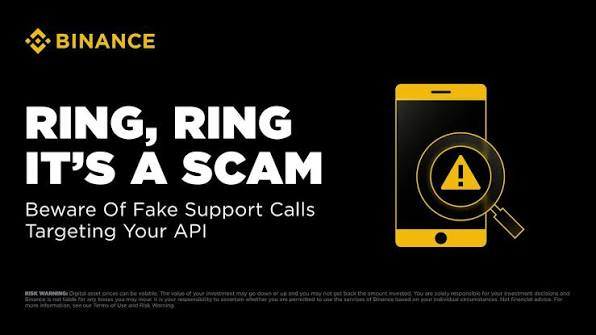
🚩 Unexpected Contact
I never contacted Binance.
They contacted me first.
Although legitimate companies sometimes send genuine security notifications, you should always be cautious when someone unexpectedly calls, emails, or messages you claiming there’s an urgent problem with your account.
Rather than responding directly, use the company’s official website or app to verify the information.
🚩 Creating Fear
The caller repeatedly said things like:
“Your account is under attack.”
“Your funds are at risk.”
“You must act immediately.”
Fear is one of the oldest social engineering techniques.
When people panic, they’re more likely to make quick decisions without verifying information.
🚩 Asking for Verification Codes
This was the biggest red flag.
Authentication codes are designed for you to complete your own login or transaction.
You should never share them with another person over the phone, by email, or through a messaging app.
If someone asks for your verification code, stop the conversation immediately and verify the situation through official channels.
🚩 Discouraging Independent Verification
When I suggested ending the call and contacting Binance myself, the caller became uncomfortable.
That was a major clue.
Legitimate customer support generally has no problem with customers using official contact methods.
Scammers often try to keep you on the phone because they know their story may fall apart if you verify it independently.
🚩 Requests for Sensitive Information
As a general rule, be extremely cautious if anyone claiming to represent a cryptocurrency exchange asks for information such as:
Your password.
Your recovery phrase.
Authentication codes.
Remote access to your device.
Always verify the request through the company’s official website or application before providing any sensitive information.
What Legitimate Support Usually Does
Legitimate exchanges and wallet providers generally encourage customers to:
Log in through the official website or app.
Use official support channels.
Protect their passwords.
Keep recovery phrases private.
Enable Multi-Factor Authentication (MFA).
If someone asks you to ignore those basic security practices, treat it as a serious warning sign.
What To Do If You Receive a Suspicious Call
If someone claims to be from a cryptocurrency exchange:
Stay Calm
Don’t panic, even if they mention suspicious activity.
Take a moment to think.
Don’t Share Sensitive Information
Never give away:
Passwords.
Recovery phrases.
Authentication codes.
Security PINs.
End the Conversation Politely
If you’re unsure, it’s perfectly acceptable to end the call.
You can say:
“Thank you. I’ll contact customer support through the official website.”
A legitimate representative should understand.
Contact the Company Yourself
Open your browser.
Type the company’s official website address yourself.
Don’t rely on links sent through emails or messages.
Use the official support page to verify whether the warning is genuine.
Review Your Account
After logging in through the official website or app, check for:
Security notifications.
Recent login activity.
Unknown devices.
Changes you didn’t make.
If you notice anything unusual, follow the platform’s official account recovery or security guidance immediately.
Frequently Asked Questions
Does Binance call customers?
Communication methods can vary over time and by situation.
If you receive an unexpected call claiming to be from Binance—or any exchange—it’s safest to verify it through the official website or app rather than relying on the caller’s claims.
Can scammers fake phone numbers?
Yes.
Caller ID information can sometimes be manipulated to make a call appear more trustworthy.
That’s why you shouldn’t rely solely on the phone number displayed on your screen.
Why do scammers ask for authentication codes?
Those codes help confirm access to an account or transaction.
If someone else obtains your code while attempting to sign in, they may be able to complete that login.
Treat verification codes like passwords—keep them private.
What’s the safest habit?
Whenever you’re contacted unexpectedly about your cryptocurrency account:
Stop. Verify. Then act.
That simple routine can prevent many scams.
Final Thoughts
The fake Binance support agent almost succeeded because he understood human psychology.
He didn’t rely on hacking.
He relied on trust.
He knew that if he sounded knowledgeable, remained calm, and created just the right amount of urgency, many people would cooperate without asking questions.
Fortunately, I chose to verify everything independently.
That one decision protected my account.
The next time someone contacts you claiming to represent your bank, cryptocurrency exchange, wallet provider, or any online service, remember this:
Don’t trust the phone call.
Don’t trust the email.
Don’t trust the message.
Trust the official website.
Taking a few extra minutes to verify information could save you from losing not only your cryptocurrency, but also your peace of mind.
About the Author
Jackson Godwin is a Cybersecurity Consultant specialising in Vulnerability Assessment and Penetration Testing (VAPT), Governance, Risk and Compliance (GRC), ISO/IEC 27001, PCI DSS, Cloud Security, AI Security, and Digital Risk Management.
With years of experience helping organisations identify vulnerabilities, strengthen security controls, and improve cyber resilience, Jackson is passionate about making cybersecurity practical, easy to understand, and accessible to everyone.
Through JacksonTechnology.com.ng, he publishes cybersecurity awareness stories, ethical hacking tutorials, compliance guides, cloud security insights, AI security resources, and practical online safety tips to help individuals and businesses stay protected against evolving cyber threats.
His mission is to educate, empower, and inspire safer digital habits—one cybersecurity story at a time.